Bread machine pans and teflon


Hi Friends,

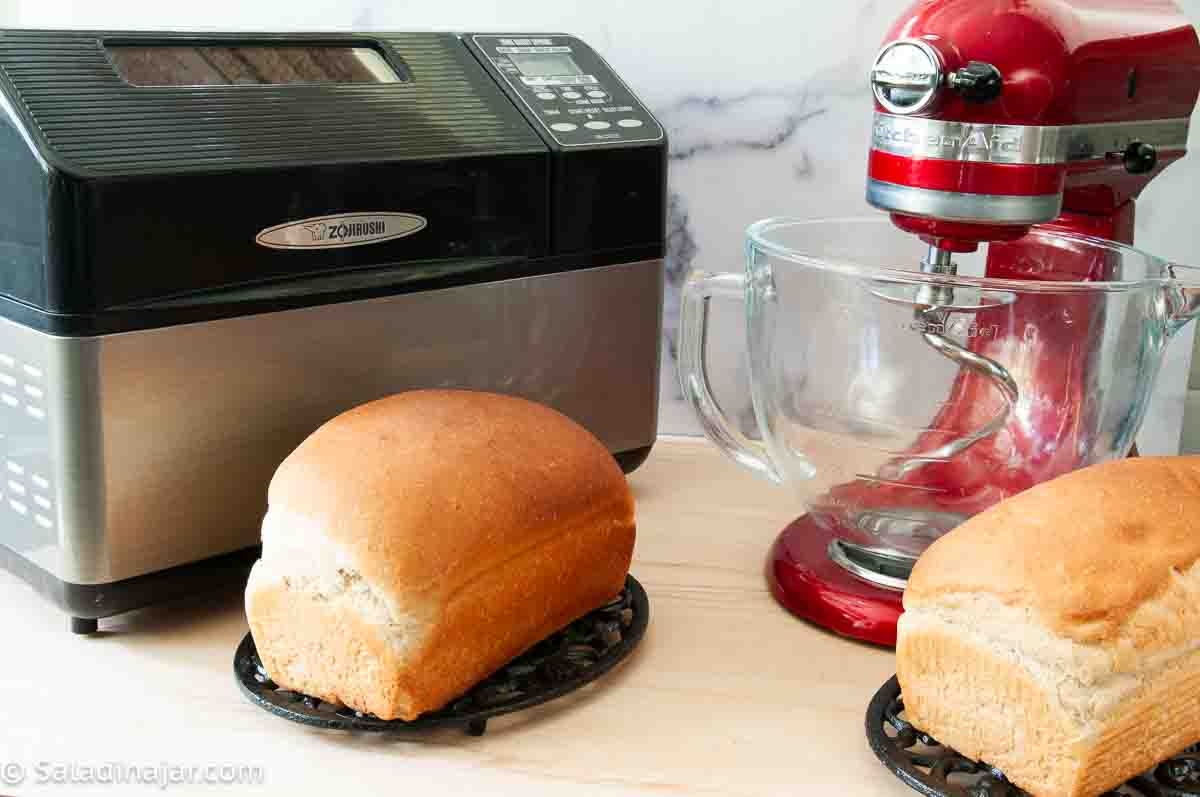
If you’re shopping for a bread machine—or wondering why your pan looks worn—here’s a quick behind-the-scenes look at something most manufacturers never talk about: the nonstick coating.

⭐ Almost All Bread Machine Pans Are Coated

Whether it’s called PTFE, Teflon, or “nonstick,” nearly every bread machine pan uses a slick coating so the paddles can knead without the dough grabbing onto the sides. Uncoated pans simply don’t release well enough for bread dough.

⭐ Is It Safe?

Bread machine pans don’t get hot enough to harm PTFE coatings—wear over time is the real issue. Most machines run about 300–350°F, well below PTFE breakdown temperatures. See guidance from the U.S. Food and Drug Administration or American Cancer Society for details. (Those low temperatures are just one of the reasons I bake all my bread in a conventional oven for a better crust.)

⭐ Why the Coating Wears Out

Friction from kneading, dough rubbing the sides, and general use slowly take their toll. The finish lasts much longer when you use the DOUGH cycle and bake in a regular oven. The BAKE cycle inside the machine uses higher, sustained heat that shortens the pan’s lifespan.

Other things that wear out the coating:
• Dishwashers
• Metal utensils
• Long soaks
• Frequent baking

Most bakers replace their pan every 2–4 years. Heavy users may replace it sooner. When buying a new bread machine, checking for the availability of replacements parts is a really good idea.

⭐ How to Tell Your Bread-Machine Pan Needs Replacing

Bread sticks even with proper greasing. If loaves tear or won’t release, the coating is wearing out.
Visible scratches or dull gray spots. Shiny nonstick turns rough when the PTFE is gone.
Pan leaks during mixing. A worn seal lets dough or water seep underneath.
Loud squeaking or wobbling paddle. The shaft or bearing is wearing down.
Uneven browning or hot spots. The coating or pan metal is deteriorating.

⭐ Make Your Pan Last Longer

• Wipe clean instead of scrubbing
• Avoid the dishwasher
• Stick to silicone or wooden utensils
• Keep soaks short
• Add yeast and salt last

⭐ When Your Pan Looks Tired

Don’t replace the whole machine—just the pan or paddles. Most brands sell replacements, and they’re usually easy to install. If you are a frequent bread-machine user, consider buying an extra pan in advance. Or watch for lightly used machines in thrift stores that match your brand and keep them for parts.

⭐ Buy a Machine Without a Teflon-Type Coating

Over Christmas, I saw a Zojirushi bread machine advertised as having no Teflon coating, but it was out of stock. I haven’t seen it again, but I’m guessing it may resurface eventually. If you’re willing to spend more, look at the Sana Smart Bread Maker, made in the Czech Republic. They claim their pans and paddles are stainless steel.

Bread Machine Golden Egg Bread (with Dried Fruit)

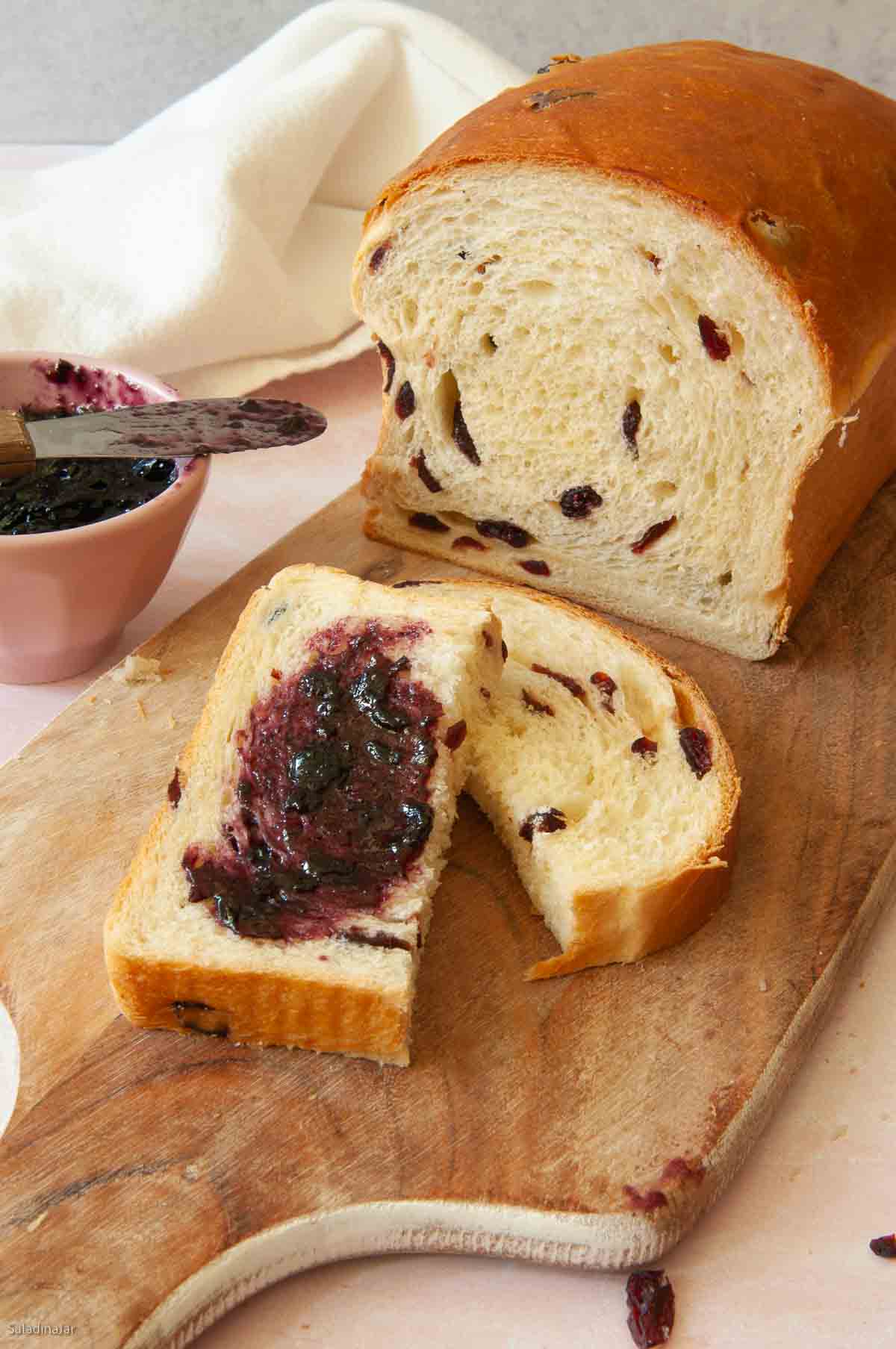
Just enough dried fruit for flavor (I chose cranberries)—no fruitcake vibes—and a dairy-free dough that works anywhere. Think challah or brioche, only lighter and less rich.

Readers Say...

"I made this bread today.It was wonderful! We added dried sour cherries and used cream cheese and lemon curd on the bread-yum."--Carol


Questions? Hit reply — you know I love talking bread.

Warmly,

Paula Rhodes | Home Economist

Food Worth Sharing

P.S. New to bread machines? My Free Bread Machine Crash Course walks you through my DOUGH-cycle-then-oven method step by step.

You are receiving this email because you signed up for emails on the Salad in a Jar website.
Unsubscribe | Update Your Interests | 4621 S. Cooper Ste 119, Arlington, TX 76017

Salad in a Jar

Check out my previous newsletters below. If you haven't already, sign up for my newsletter!
Read more from Salad in a Jar
Slow cooker queso dip poured over Frito chips with salsa on the side

Do you have a Super Bowl tradition? We usually gather with a small circle of longtime friends, our married kids, and a few of their in-laws who live nearby. Nothing fancy—just football, lots of conversation, and a table full of food everyone looks forward to. This year, I’m bringing the queso dip and the candied pecans you see below, but any of these recipes would fit right in at a Super Bowl spread. If you’re still deciding what to make, I hope this gives you a few dependable ideas. All of...

buttermilk loaf with a flyaway top

Hi Friends, As promised, this is the follow-up to the email I sent a couple of weeks ago. Previously, we talked about why a loaf of bread collapses inward on the sides after it’s baked and removed from the pan. You can read it here. Today, I’m exploring why the top of a home-baked loaf of bread lifts off—sometimes evenly, but more often just on one side, and sometimes quite dramatically. 1. The crust set too early.If the outside firms up before the inside finishes expanding, trapped steam and...

loaf caving in on the right side

Hi Friends, I hope you had a wonderful holiday season and are ready to get serious about baking fantastic bread. Quick clarification before we dive into this tricky topic:I’m not talking about loaves that sink on top—that’s usually overproofing. Check out the right side where the loaf is starting to cave in. I’m talking about loaves that look fine out of the oven, then cave inward on the side as they cool. That kind of collapse almost always points to a structure problem, not fermentation....