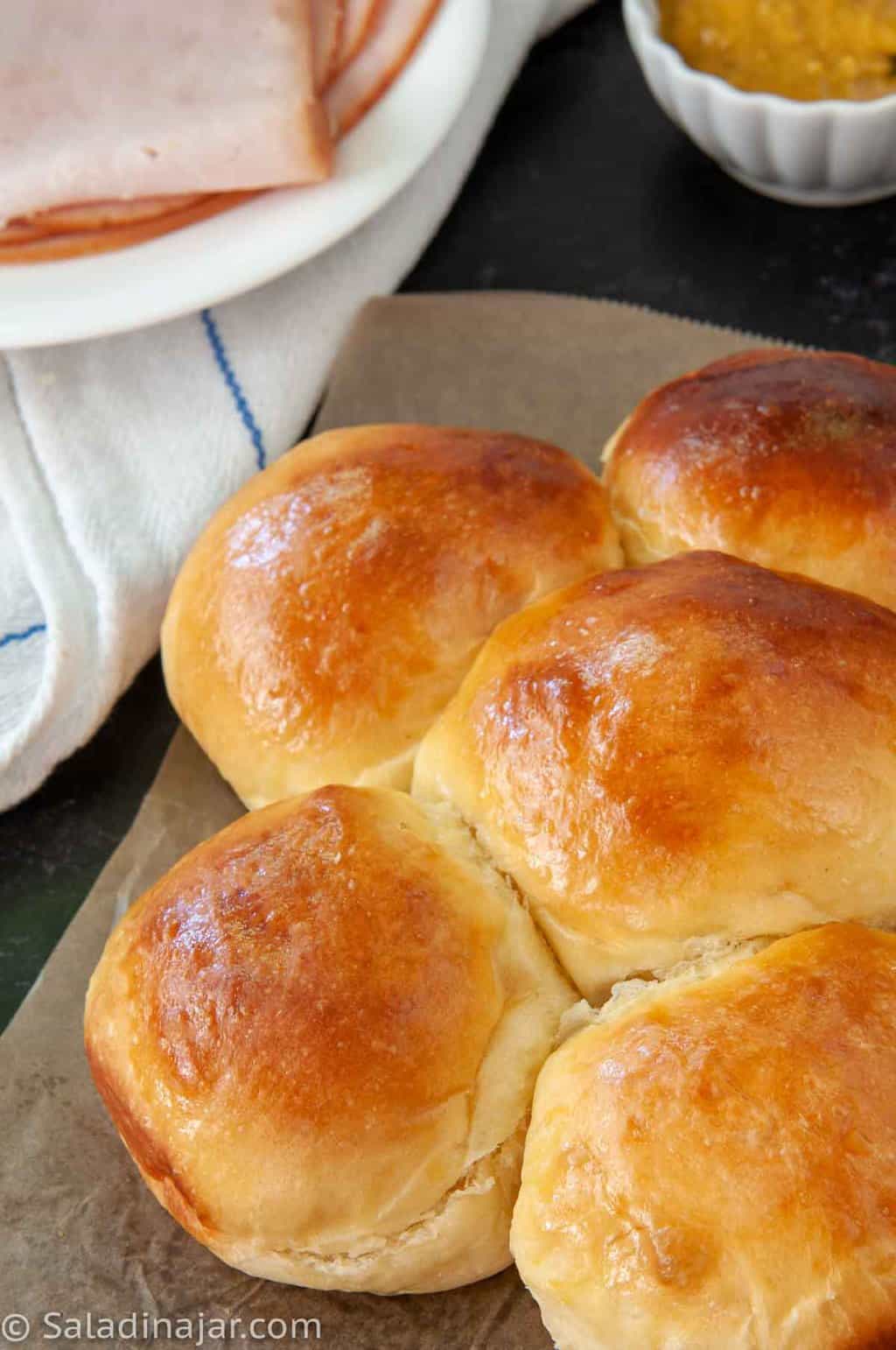
⭐️ Before You Make Those Thanksgiving Rolls… Read This


Hi Friends,

If you’re planning to make rolls this Thanksgiving, especially from an old family recipe, here’s a quick PSA before the flour starts flying. Many of those heirloom recipes are long on love and tradition but short on modern measurements—and definitely not written with bread machines in mind.

Don’t let that stop you. Just keep these two things in mind as you adapt them.


1) Watch the flour amount.

Most bread machines (except 3-lb machines) can't handle more than 4-4½ cups of flour. Using 6–7 cups of flour (which many old recipes call for) can:

  • Overheat your machine
  • Keep the dough from reaching full gluten development
  • Cause dough to rise and overflow the bread machine pan (funny story at dinner, not fun to clean up)

If your recipe uses 6–7 cups of flour:

  • Cut it in half. (See below for special instructions regarding the yeast.)
  • If you need the full amount of rolls:
    • Make the first half on the DOUGH cycle.
    • After the kneading phase, move the dough to a bowl to rise.
    • Restart the DOUGH cycle with the second half of the recipe.
    • By the time the second batch is done, the first is ready to shape.

2) Use less yeast than Grandma did.

Most 3–4-cup-of-flour recipes only need 1½ to 1¾ teaspoons of instant yeast. Modern yeast works fast, and a slower rise means better flavor.

So if the original recipe calls for a whole packet, feel free to dial it back.

This principle also applies to the reverse situation when doubling a recipe for a crowd. Double everything except the yeast. The yeast amount can stay the same as the original recipe.

For more details, click here for how to transform your favorite recipe for bread machine success.


If you want me to peek at your family recipe, just send it over. I’m always happy to help you turn it into reliable bread-machine dough.

Grateful for you,

Paula

Home Economist, Food Worth Sharing

You are receiving this email because you signed up for emails on the Salad in a Jar website.
Unsubscribe | Update Your Interests | 4621 S. Cooper Ste 119, Arlington, TX 76017

Salad in a Jar

Check out my previous newsletters below. If you haven't already, sign up for my newsletter!
Read more from Salad in a Jar
Sliced dried fruit bread on a cutting board-- one piece slathered with blackberry jelly.

Hi Friends, If you’re shopping for a bread machine—or wondering why your pan looks worn—here’s a quick behind-the-scenes look at something most manufacturers never talk about: the nonstick coating. ⭐ Almost All Bread Machine Pans Are Coated Whether it’s called PTFE, Teflon, or “nonstick,” nearly every bread machine pan uses a slick coating so the paddles can knead without the dough grabbing onto the sides. Uncoated pans simply don’t release well enough for bread dough. ⭐ Is It Safe? Bread...

Slow cooker queso dip poured over Frito chips with salsa on the side

Do you have a Super Bowl tradition? We usually gather with a small circle of longtime friends, our married kids, and a few of their in-laws who live nearby. Nothing fancy—just football, lots of conversation, and a table full of food everyone looks forward to. This year, I’m bringing the queso dip and the candied pecans you see below, but any of these recipes would fit right in at a Super Bowl spread. If you’re still deciding what to make, I hope this gives you a few dependable ideas. All of...

buttermilk loaf with a flyaway top

Hi Friends, As promised, this is the follow-up to the email I sent a couple of weeks ago. Previously, we talked about why a loaf of bread collapses inward on the sides after it’s baked and removed from the pan. You can read it here. Today, I’m exploring why the top of a home-baked loaf of bread lifts off—sometimes evenly, but more often just on one side, and sometimes quite dramatically. 1. The crust set too early.If the outside firms up before the inside finishes expanding, trapped steam and...